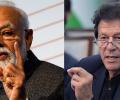
Modi's hardline policy towards Pakistan and J&K has created numerous leverages and bargaining positions that New Delhi can bring to the bargaining table and translate into concessions, argues Ajai Shukla.

The leader of Pakistan's hardline Jamiat Ulema-e-Islam party said the government and political parties in Pakistan favoured a negotiated settlement to outstanding issues.
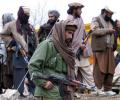
In a significant climbdown, the Pakistani Taliban on Wednesday said it is ready for a ceasefire and peace talks if the government stops arresting its fighters and killing them in fake police encounters.
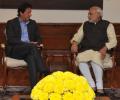
Khan proposed a meeting between Foreign Minister Shah Mehmood Qureshi and his Indian counterpart Sushma Swaraj on the sidelines of the UN General Assembly in New York this month.

'but the terrorism issue should be fair, square at the centre of the conversation. It is the major issue ... I am not saying there are no other issues. But I am not going to duck that issue for the sake of talking'

Kartarpur Sahib in Pakistan is located across the river Ravi, about four kilometres from the Dera Baba Nanak shrine in Punjab's Gurdaspur district.
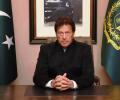
Khan's remarks came a day after Modi in a rally in Rajasthan said, "There is consensus in the entire world against terrorism. We are moving ahead with strength to punish the perpetrators of terrorism..."

The formal talks have yet to resume," Prime Minister Nawaz Sharif's Adviser on Foreign Affairs Sartaj Aziz said.
Modi said India is ready for constructive engagement with Pak.

The army chief's comments on Wednesday, at the Raisina Dialogue, on engaging with Taliban were first such public remarks by a senior functionary of the government.
Pakistan has claimed it had gone 'out of the way' in its peace overtures towards India but failed to get a positive response, after United States President Barack Obama asked the two nations to begin talks on 'less controversial issues' and resolve their differences. Claiming that Islamabad wants early resumption of the composite dialogue process with India, Pakistan President Asif Ali Zardari said that his country stands for peace in the region and the world.

Acting tough, India on Monday called off foreign secretary-level talks with Pakistan next week and conveyed a blunt message that it was interfering in India's internal affairs by holding talks with Kashmiri separatists which was "unacceptable".
Pakistan and Afghanistan on Friday began negotiations on a Strategic Partnership Agreement even as Kabul called on Islamabad to take more steps, including the release of Taliban detainees, to push forward the troubled peace process in the war-torn country.
India's ambassador to the United States, Harsh Vardhan Shringla, who was visiting The NYT editorial board, rejected Khan's criticism.
Addressing several issues critical to the relationship between India and Pakistan on the sidelines of trilateral talks with Afghanistan and Turkey in Istanbul, Malik said that Pakistan had no objections to a pact between India and Afghanistan, provided such a pact did not jeopardise the interest of the region.

A defiant Pakistan on Wednesday made it clear that it will continue talking to Kashmiri separatists despite India's protestation, saying that the "bottomline" for Indo-Pak talks on Kashmir issue was to engage all stakeholders and dialogue was not a favour by Pakistan to India or vice versa.

Nawaz Sharif was the last Pakistani prime minister to visit the US on an official trip in October 2015.

The road ahead will be long and winding and much resistance can be expected from the high-flying 'hawks' in our skies. But that should not deter the policymakers from planning a road map with the 'big picture' in mind, observes Ambassador M K Bhadrakumar.
The deputy prime minister made it clear that there would be no compromise on the country's "unity and integrity."

Khan was convicted in the Toshakhana case which was filed last year on the complaint of the Election Commission of Pakistan (ECP) which had earlier disqualified him in the same case.

Pakistan's close ties with China and its lack of democracy and disregard for human rights will not be overlooked, said Haqqani, who currently is a Senior Fellow at the Hudson Institute think-tank in Washington.
Reiterating the desire for establishing peace and stability in the region, Aziz said Pakistan was seeking resolution of all differences with India.
External Affairs Minister S M Krishna will undertake his much-anticipated visit to Pakistan in the first half of September.
The US is keeping the doors open for negotiations with the terror group as the Afghan endgame plays out, says Amir Mir reporting from Islamabad.

"We want to work closely (with) Pakistan to create a more stable and secure Pakistan as well," he said.

"Whether we are back or away, if they put Kashmiri Pandits in isolation, they will never see peace in Kashmir."

Despite the failure to ink the agreement on a new liberalised visa regime, India and Pakistan on Friday said that home secretary-level talks in Islamabad were fruitful.

Shah said "three families" are answerable to the people for their failure to develop Jammu and Kashmir over the past seven decades.
Strongly recommending the case of continued peace talks between India and Pakistan, the Barack Obama administration has said that a stable Indo-Pak relationship would benefit the world and the United States in particular and reiterated that Islamabad should address New Delhi's concern with regard to the 26/11 attacks."It is important for Pakistan and India to have a stable relationship," State Department spokesman P J Crowley said.
India's concerns over terror and slow pace of Mumbai trial were discussed in the first round of Indo-Pak foreign secretary-level talks dealing with the issue of peace and security during which the Samjhuta bomb blast case also came up with both sides holding "substantive" deliberations in a "forward looking" approach.
Ahead of the key strategic dialogue with Pakistan, the Obama administration on Wednesday shot down Islamabad's plea to help it resume peace talks with India and mediate on key disputes with New Delhi on issues including Kashmir.
In recent years, China has refrained from taking a public stance on the India-Pakistan ties, expressing hope for resolution of the disputes through dialogue.
The ISI was taking no chances and wanted no repeat of Pulwama; it wanted to make it clear at a political level it was not involved with the revenge attack being planned, but was only giving India a friendly tip-off. A stunning excerpt from Ambassador Ajay Bisaria's Anger Management: The Troubled Diplomatic Relationship between India and Pakistan.
'The Pakistani move to ban militant outfits and placate international opinion and Islamabad's openness to a UN security council resolution on Azhar -- instead of beseeching China to cast yet another veto -- enables Islamabad to occupy the high ground,' notes Ambassador M K Bhadrakumar.
The US has made it clear that it is not directly involved in talks between India and Pakistan, but encourages them to resume their peace dialogue, even as it said it wants Islamabad to rein in terror outfits like the Lashkar-e-Tayiba.
Virtually supporting India's precondition for any peace talks with Pakistan, a top United States diplomat on Thursday said Islamabad needs to do more to bring to justice the perpetrators of the Mumbai terror attack, which claimed over 170 lives including six Americans. Robert Blake, now tipped to become the Assistant Secretary of State for South and Central Asia Bureau of the State Department, told a powerful Congressional Committee that Pakistan needs to do more on 26/11.

'India needs to deeply introspect on the costs of pursuing peace with Pakistan,' says Lieutenant General Syed Ata Hasnain (retd).
Indian spiritual guru Sri Sri Ravi Shankar on Tuesday offered to hold talks with the Taliban to usher in peace in the region, saying it would help foster understanding among people with divergent views.
